How AI is Revolutionizing Radiology and Diagnostic Accuracy
Artificial Intelligence is transforming the field of medical imaging. Learn how AI tools are assisting radiologists in detecting diseases earlier and more accurately.

Mercysam Editorial Board
Medical Content Team
The Intersection of Technology and Medicine
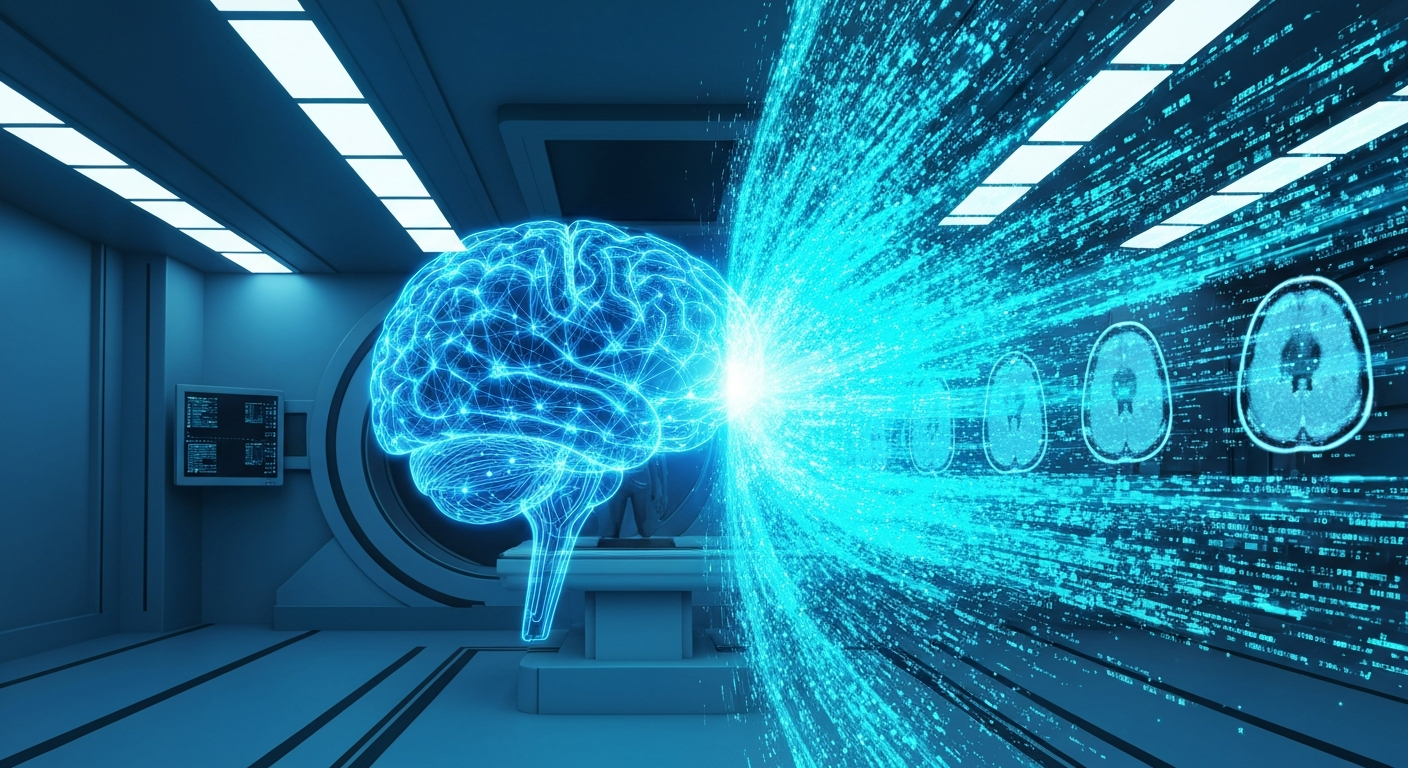
The field of radiology has always been driven by technological advancement, from the discovery of X-rays to the development of MRI. Today, we are witnessing the next great leap forward: the integration of Artificial Intelligence (AI) and machine learning into diagnostic imaging. AI is not replacing radiologists; rather, it is providing them with powerful new tools to enhance their capabilities.
Seeing the Unseen
Medical images, such as CT scans and MRIs, contain a vast amount of data—often more than the human eye can fully process. AI algorithms, trained on millions of annotated images, excel at recognizing complex patterns. They can highlight subtle anomalies, such as micro-calcifications in breast tissue or tiny nodules in the lungs, which might indicate the earliest stages of cancer, long before they become clinically apparent.
Enhancing Speed and Workflow
In a busy diagnostic centre, efficiency is critical. AI can rapidly triage incoming scans, flagging those with critical findings—such as a brain hemorrhage or a collapsed lung—for immediate review by a radiologist. This prioritization ensures that the most urgent cases receive attention first, potentially saving lives in emergency situations.
Improving Consistency and Reducing Errors
Human interpretation of medical images can be subjective and subject to fatigue. AI provides a consistent, objective analysis, acting as a tireless "second pair of eyes." By cross-referencing a radiologist's findings with its own analysis, AI helps reduce diagnostic errors and ensures a higher standard of accuracy across the board.
Quantitative Analysis and Tracking
AI excels at precise, quantitative measurements. It can automatically calculate the volume of a tumor, measure the ejection fraction of the heart, or track the progression of a disease over multiple scans. This objective data is invaluable for oncologists and other specialists monitoring the effectiveness of a patient's treatment plan.
The Future of Collaborative Diagnostics
The future of radiology is a collaborative one, where the intuitive expertise and clinical judgment of the human radiologist are augmented by the analytical power of AI. This synergy promises to deliver faster, more accurate, and more personalized diagnostic insights than ever before.
Conclusion: Embracing Innovation at Mercysam
At Mercysam Diagnostic Centre, we recognize the transformative potential of artificial intelligence in healthcare. By continuously investing in advanced technologies and software, we ensure that our diagnostic services remain at the cutting edge, providing our patients with the highest level of care and diagnostic certainty.